
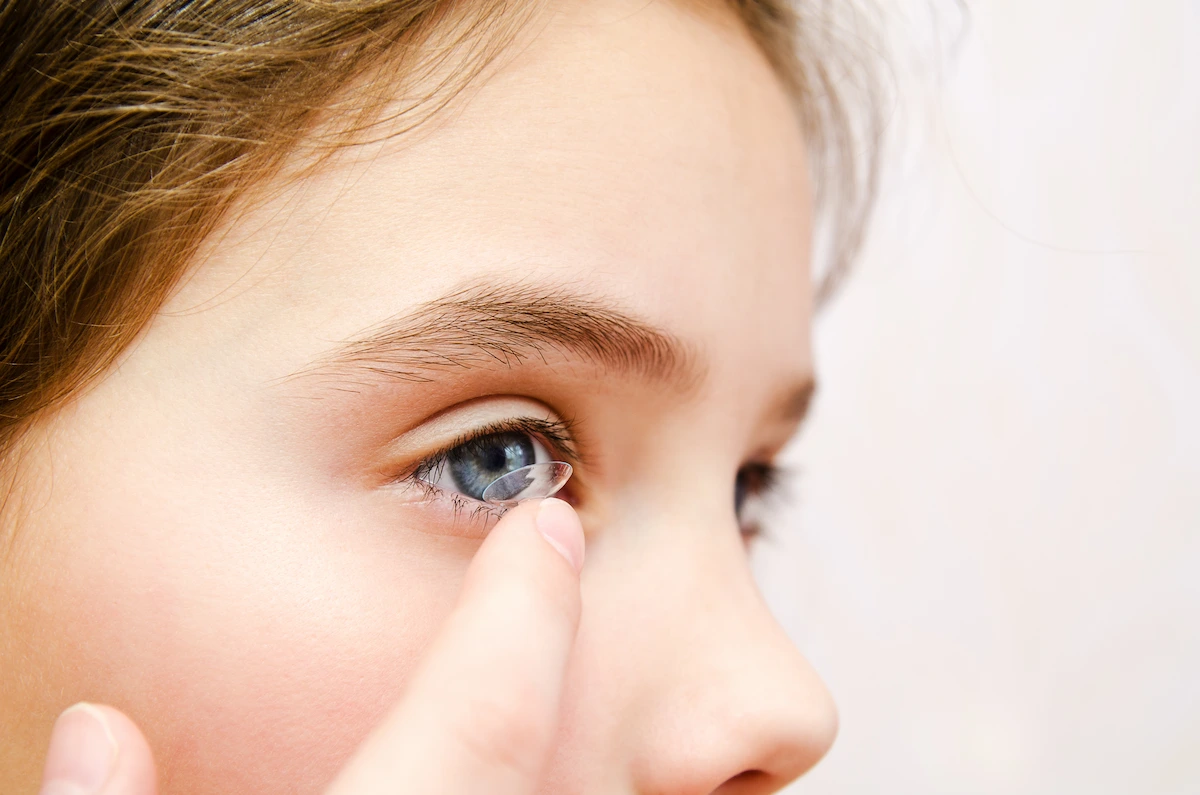
Many parents wonder when their child can start wearing contact lenses. There is no one “right” age. A child may be ready for contacts when they are motivated, able to follow a daily care routine, and have completed a pediatric eye exam to make sure contacts are a healthy option for their eyes.
Dr. Mary Charbonneau and Dr. Charles Charbonneau help Pensacola families decide whether contact lenses fit their child’s vision needs, activities, and routine. For some children, contacts can make sports, school, and everyday activities more comfortable. For others, eyeglasses may still be the better choice.
What age can children start wearing contact lenses?
Age is less important than responsibility. Some children as young as 8 to 12 can wear contacts successfully, while some teens may be better off waiting.
Your child may be ready if they can:
- Wash and dry their hands before handling lenses
- Put in and remove lenses safely
- Follow the recommended replacement schedule
- Avoid sleeping or swimming in contacts unless their doctor says it is safe
- Speak up when their eyes feel uncomfortable or their vision changes
A child who is excited about contacts for sports or convenience may be more willing to take ownership of the routine. Parents should still expect to offer reminders and supervision at first.
What happens during a contact lens exam?
A glasses prescription is not the same as a contact lens prescription. Before your child can wear contacts, they need a contact lens exam and fitting.
The doctor checks your child’s vision, eye health, and eye shape to determine the proper lens fit, curvature, and diameter. Your family can also discuss options such as daily disposable, bi-weekly, or other soft contact lenses.
Your child will receive hands-on guidance for inserting, removing, and caring for their lenses. The team takes time to make sure younger patients feel comfortable with the process before they leave.
Are daily disposable contacts a good option for kids?
For many children, daily disposable contacts are a simple option. They wear a fresh pair each day and throw them away at night, so there is no lens case or cleaning solution to manage.
Daily lenses may work well for children who play sports, have busy schedules, or may struggle with a multi-step cleaning routine. The best option depends on your child’s prescription, eye health, lifestyle, and ability to follow instructions.
Should my child wear glasses or contacts?
Contacts do not need to replace glasses. Many children use both, wearing contacts for sports or special occasions while keeping glasses as a dependable backup.
If your child is new to vision correction, start with an eye exam. Signs your child may need glasses — such as squinting, headaches, and trouble seeing the board — can be easy to miss at first.
Get personalized guidance for your child’s vision
The right time for contact lenses depends on your child’s needs and readiness, not a specific birthday. We provide pediatric eye exams for children ages 4 and older, along with contact lens fittings for Pensacola families.
Schedule an appointment to discuss whether contact lenses are a good next step for your child.